America is the one of the few countries that protects minority rights through our political system. Most democracies do not have a mechanism that protects the rights of minorities through the power of the filibuster, federalism, and the ability of different political parties to control different branches of government.
We also have a Constitution which protects additional rights, that can not be questioned by Congress or the President. Congress has two branches, the House and Senate, drawn from distinctively different constituencies. It also have a separate executive, the President, who is drawn from a national constituency. Unless all these diverse groups agree, no policy can be implemented.
Most countries allow their governments toΒ engageΒ in rash decisions,Β allow a simple majority to act in a tyrannical fashion. Fortunately, America is globally unique, and and we restrict the power of the majority by empowering minorities. This is one of the reasons why America’s democracy has outlived most other countries, and has proven to be a stable, long-lasting form of government.

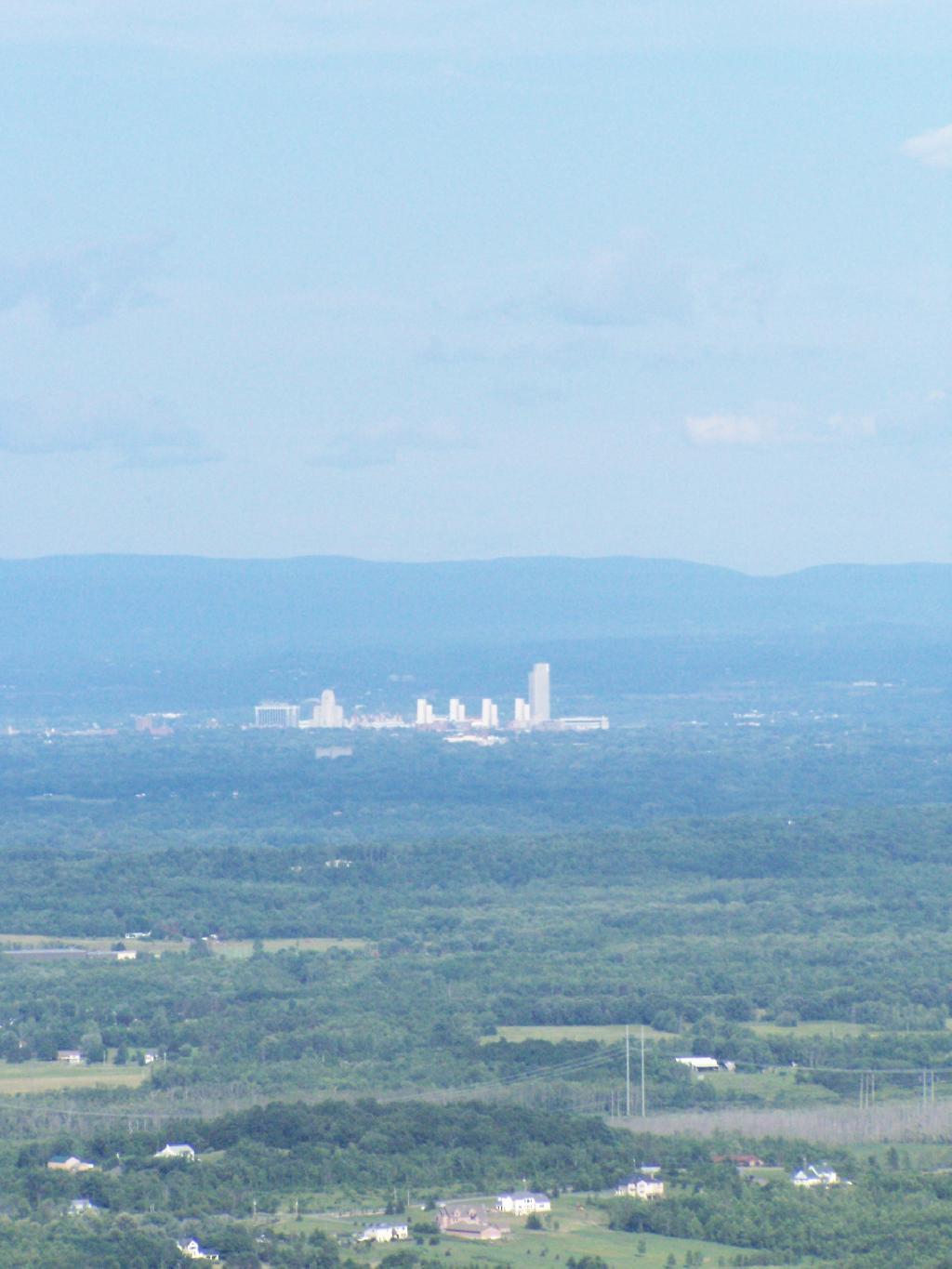
Would government be effective if urban areas and those areas in the urban sphere of influence such as the suburbs where separate from truly rural areas, where residents rarely go to city? By definition, the urban-rural interface is the border between the lands within a practical commuting distance for the productive non-farming rural resident and the rural resident who rarely interacts with the city.
As Iβve written many times in the past, urban policies being applied to rural areas rarely make sense, as do rural policies applied to urban areas. The conflict between the rural and the urban is best mitigated by creating and having two separate and sovereign governments, while allowing them to come together for questions of national and international policy, for things like nation defense, transportation infrastructure, and large-source emittersβ pollution control.
Political districts currently are based on haphazards of history or attempts at gaming the political system and not geographic reality. Large regional governments in urbanized areas and their spheres of influence would be far more effective at addressing the large problems of day from transportation to materials recovery or disposal. Moreover, the linkages between two urban regions of similar size (such as Syracuse Urbanized-area and Albany Urbanized-area), are far closer in many ways then a single county (Albany Countyβs Urban Sphere of Influence versus those areas in extreme western-portion of Albany County outside of Urban Sphere of Influence).
Urban areas really like their new found power since the awful 1964 ruling in Reynolds vs Simms, that mandated both houses of a legislature be equally proportioned, and banned the upper house (ie. Senate) from being based on geography, giving rural areas limited voice in the process. Urban and more liberal constituencies are unlikely to give up their dominance in the process, or allow more rural areas to have sovereignty, because itβs fun to boss around people you disagree with.
While maybe politically impractical, giving urban and rural areas complete sovereignty in their own matters would solve a lot of problems, and create policies more appropriate for their constituencies.
The Fourth Amendment of the U.S. Constitution protects people from random and arbitrary stops and searches. Although the federal government claims the power to conduct certain kinds of warrantless stops within 100 miles of the U.S. border, important Fourth Amendment protections still apply. This helps you understand your rights within the 100-mile border zone.β
I like the idea of creating an American Union with Canada and Mexico with free movement of people and goods like the European Union. Then people could choose what country offers the best jobs, best laws, best living options. Each country has their strengths and weaknesses just like each country does in the European Union. Like with states, let people vote with their feet.