Sickly Spruce Stand
This spruce stand doesn't look all that healthy in Maimi Flats.
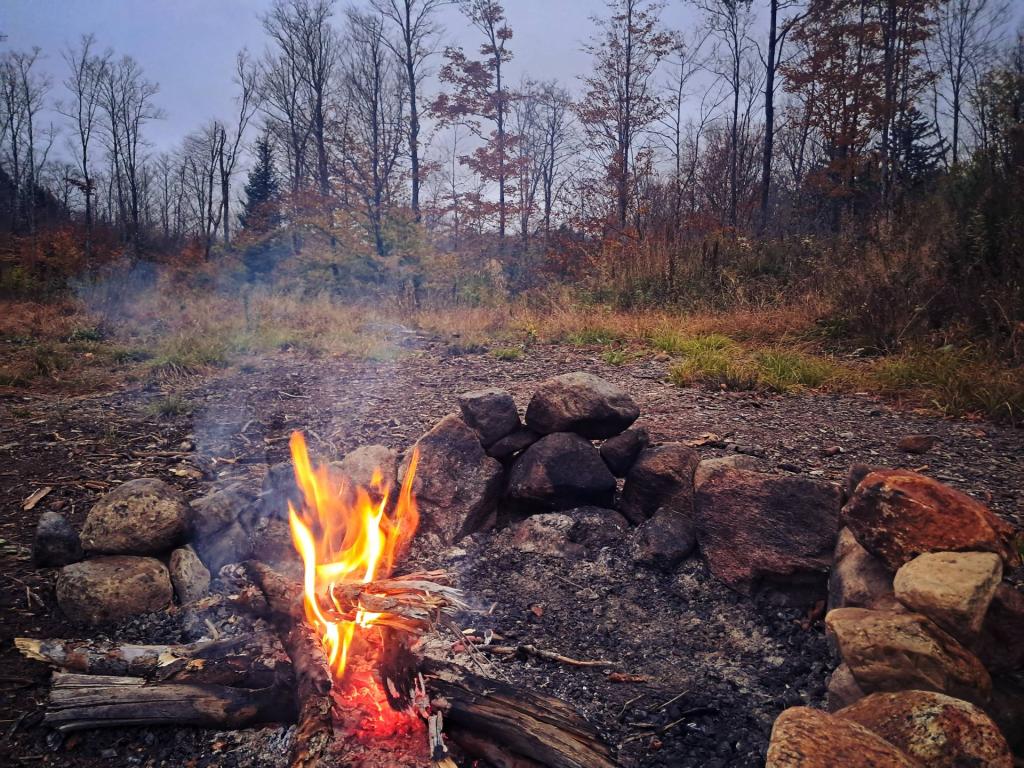
Sunday May 24, 2020 — Perkins Clearing and Speculator Tree Farm Conservation Easement Lands — Jessup River Road - Perkins Clearing - Campsites and Mason Lake Access 🗺 — Kunjamunk Cave 🗺 — Old Route 8B - Austin Falls - Robbs Creek - Camping 🗺Fire
Jessup River Road at NY 30 (1920)
Jessup River Road at NY 30 based on those miles to trail heads, from the state archives. September 1920.
Friday February 17, 2006 — Perkins Clearing and Speculator Tree Farm Conservation Easement Lands — Jessup River Road - Perkins Clearing - Campsites and Mason Lake Access 🗺 — Kunjamunk Cave 🗺 — Old Route 8B - Austin Falls - Robbs Creek - Camping 🗺A History of Perkins Clearing
Located just north and west of the village of Speculator, New York, the 14,330-acre Perkins Clearing tract both provides timber and recreation to New Yorkers. Before European settlers arrived, the region was used as seasonal hunting grounds by the Mohawk and Abenaki peoples. The tract eventually drew its name from Isaiah Perkins, a legendary local guide and innkeeper who established a popular deer hunting and fishing camp deep in the woods during the late 19th century. His wilderness lodge became a storied destination for sportsmen in the early 1900s, praised for its great food, ample game, and expert guiding. Later on Perkins would go on to establish the Adirondack Theater in Speculator.
Between 1898 and 1902, International Paper Company (IP) began aggressively buying up vast swaths of land in the area. IP established its regional woods operations headquarters right up the road from Perkins’ old camp. Lumbermen built flood dams along the Jessup River and its tributaries to flush spruce and balsam pulpwood downstream into Indian Lake. From there, logs floated all the way down the Hudson River to the IP paper mill in Corinth. By the 1940s and 1950s, the clearing was a bustling industrial village. It housed hundreds of loggers, clerks, and bookkeepers, and utilized unique heavy machinery like Linn Tractors (heavy work vehicles with front skis and rear tank-tracks) to haul timber through challenging winter terrain. The final river log drive took place in 1947, after which trucks took over timber transport.
Over the decades, land acquisition by both the state and private lumber barons created a confusing “checkerboard” pattern of alternating square-mile land parcels. One square belonged to New York State’s “Forever Wild” Forest Preserve, while the adjacent square belonged to IP. This layout made land management a nightmare. The state couldn’t guarantee continuous public hiking trails, and IP couldn’t legally harvest timber without trespassing on state land. Because the New York State Constitution strictly forbids the sale or exchange of Forest Preserve land under Article 14, resolving this required a statewide public vote to amend the constitution.
In November 1979, voters narrowly approved Amendment #2 by a razor-thin margin of 50.7% to 49.3%. Environmental groups like the Adirondack Council supported it for its ecological benefits, while groups like the Sierra Club opposed it on the principle of tampering with Article 14. The official swap was finalized in 1983. When it was completed, the state’s Forest Preserve gained 10,300 contiguous acres of unbroken wilderness. At hte same time, International Paper was able to consolidated 7,100 contiguous acres for more efficient timber harvesting.
On July 15, 1995, the tract was heavily impacted by the “Ontario-Adirondacks Derecho.” This massive severe weather system packed hurricane-force microburst winds that leveled vast swaths of mature timber across Perkins Clearing and the neighboring Speculator Tree Farm. The event drastically altered the local canopy and triggered years of intense salvage logging and forest regeneration.
In 2005, New York State purchased the recreational rights to the land from IP in exchange for reduced future taxes and a one-time cash payment. Shortly after, in 2006, IP sold its remaining timberlands to the Lyme Timber Company. Under this unique public-private partnership, Lyme Timber continues sustainable commercial logging operations, while the public enjoys permanent access for hunting, fishing, paddling, and primitive camping at designated campsites. This easement provides access to key destinations in the West Canada Lake Wilderness, along with access to the 138-mile Northville-Placid Trail, over 10 miles of designated mountain bike routes and maintains over 35 miles of groomed snowmobile trails that connect local Adirondack communities.


![Untitled [Expires September 16 2024]](https://mail.andyarthur.org//data/photo_016562_large.jpg)